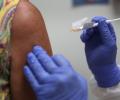
The Union health ministry has directed states to identify all left-out people and ensure everyone gets their Covid jab through initiatives such as workplace vaccination, as part of the government's "Har Ghar Dastak" campaign. Health Minister Mansukh Mandaviya held a review meeting on vaccination progress with Manipur, Meghalaya, Nagaland and Puducherry on Monday. In a tweet, the minister said, "Spoke about augmenting Govt's #HarGharDastak vaccine campaign. Requested help from religious leaders, NGOs & political groups to speed-up vaccination coverage." Health secretary Rajesh Bhushan has asked state officials that workplace vaccination should be organised for targeting people due for their doses.
Experts, however, feel that given the intensity of the second wave and the high single dose coverage, India is in a good position to avoid any drastic wave in the near future.
Tamil Nadu plans parallel programme with unique user IDs
Will syringe shortage puncture India's Covid vaccine plans?

Lack of clarity on data-sharing persists, public health experts sceptic about the pilot that was run in six Union territories as benchmark for national roll-out

'Demand is wonderful. We have crossed 10 million on many days.' 'The Swedish trade commissioner recently said, "You guys are vaccinating the entire Sweden in one day".'

In September, Bharat Biotech aimed to supply 35 million doses, and take this up to 55 million by October. This is still less than what the Indian government expects from the company.
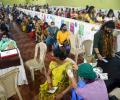
With the maximum dose gap of four months for Covishield, a large part of the population would not even be eligible for the second dose by the end of this year, report Ruchika Chitravanshi and Ishaan Gera.
The government said it had received many representations seeking extension of time citing many difficulties due to the second wave of Covid-19 and the subsequent lockdowns. MCA has asked the registrar of companies to approve the extension of the time limit to hold the AGM.
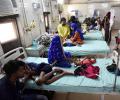
The sudden spike in cases of fever in India has claimed over 100 lives in five states, including UP, MP, Bihar, Haryana, and West Bengal. In UP, Firozabad and Mathura alone have reported 72 cases.

Pfizer can show the FDA approval to the Indian regulator and present a case that based on whatever data submitted, the US regulator has granted a full marketing nod, says Sohini Das.

The Centre is looking to procure around 1 billion syringes between September and December to support the COVID-19 vaccination drive.
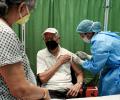
Gennova has also got permission for phase-2 and 3 clinical trials for its lyophilised mRNA vaccine for injection from the subject expert committee advising the Central Drugs Standards Control Organisation, reports Sohini Das.
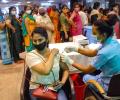
Government institutions and pharma industry are examining if a 'cocktail' approach to making a multi-variant Covid-19 vaccine works against multiple strains of the ever-mutating virus, reports Sohini Das.
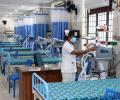
The health system is trying to ensure that it isn't caught by surprise -- the way it was last time. So, hectic preparations are on.

While Lupin is working on a Remdesivir powder for inhalation, Glenmark has tied up with a Canadian Biotech firm for nitric oxide nasal spray that reduces Sars-CoV-2 viral load and thus transmission.
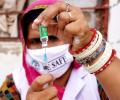
If things go according to plan, the vaccine would be available in the market by the end of this year.

Adar Poonawalla said he was hopeful that Covovax, the Novavax vaccine made by SII, will be launched around October this year for adults and for children by the first quarter of next year, depending on DCGI approvals.
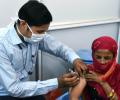
While some experts believe that a large part of India is still vulnerable to the virus that could trigger a third wave, others feel the country is not likely to be engulfed by another deadly wave unless a new variant emerges.

India is not keen to 'bow down' to demands related to indemnity against legal liabilities in case any vaccine recipient develops severe adverse reactions post inoculation.
 © 2026 Rediff.com - Advertise with us - Disclaimer - Privacy Policy - Sitemap - Feedback - About us - Terms of use - Grievances